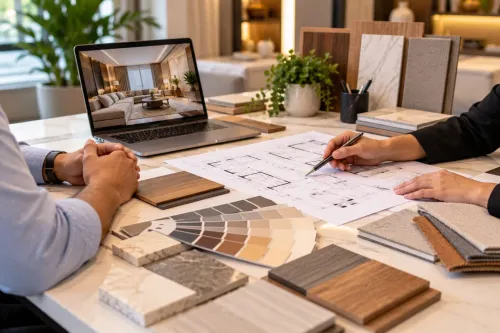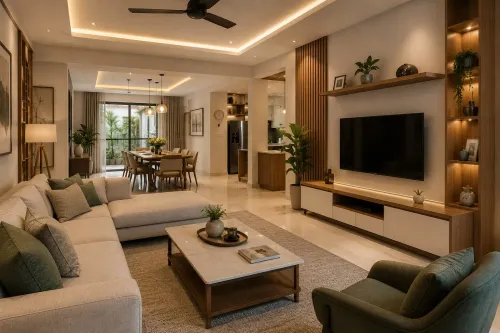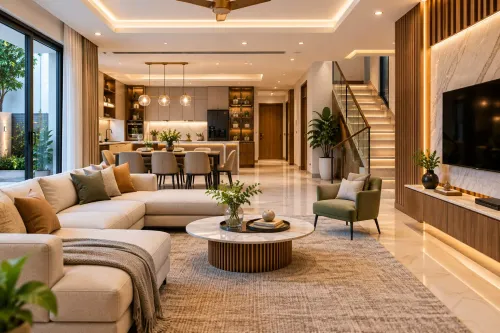
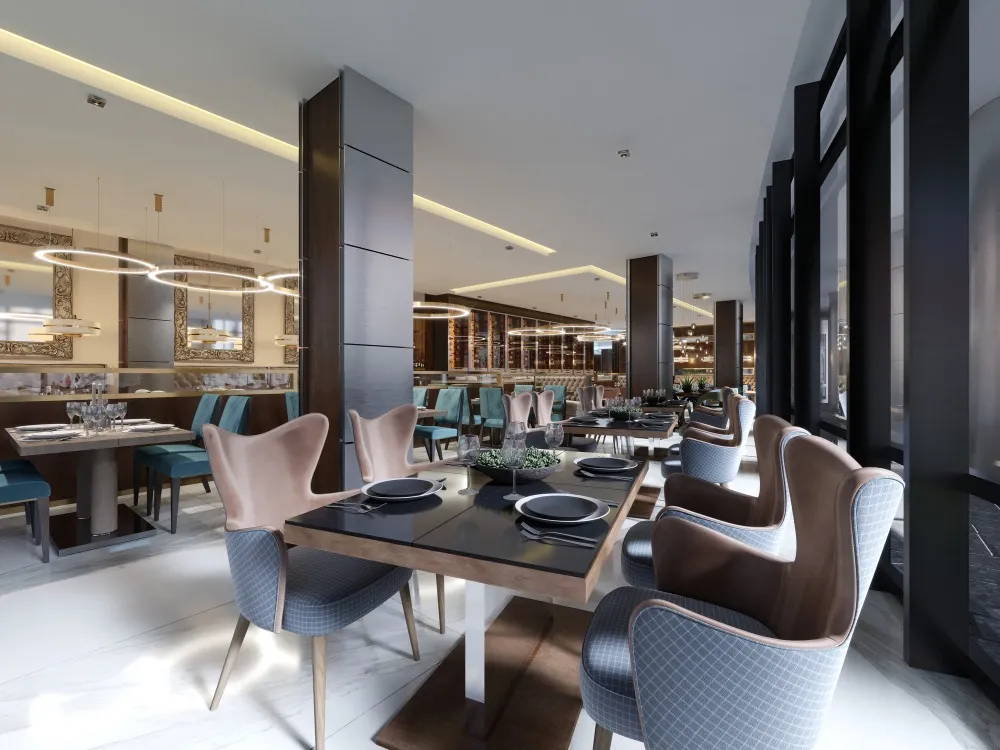
Food may be the central reason customers visit a restaurant, but the physical environment strongly shapes the overall dining experience. Seating comfort, lighting, circulation, acoustics, colours, and material choices can influence how guests perceive a restaurant from the moment they enter.
A skilled restaurant interior designer considers these factors alongside operational requirements. For restaurant owners in Noida and the wider Delhi NCR market, thoughtful interior planning can help create a dining space that feels distinctive without compromising staff efficiency.
Restaurant Design Begins with the Concept
The strongest restaurant interiors usually have a clear concept behind them.
A fine-dining restaurant requires a different atmosphere from a casual café. A family restaurant may prioritise comfortable seating and easy circulation, while a premium hospitality concept might focus on layered lighting, sophisticated finishes, and greater privacy.
Before selecting furniture or finishes, it helps to define:
- Target customer profile
- Cuisine and service style
- Average dining duration
- Desired seating capacity
- Brand personality
- Customer price expectations
- Daytime and evening ambience
These factors establish the direction for the interior.
Layout Influences Customer Experience
Restaurant layouts must balance customer comfort with operational efficiency.
Increasing the number of tables may appear commercially attractive, but overcrowding can negatively affect circulation, privacy, and service quality.
Good space planning considers the relationship between the entrance, waiting area, dining zones, service stations, kitchen access, washrooms, and billing counter.
Staff should be able to move efficiently without repeatedly crossing customer pathways.
Lighting Creates Different Dining Moods
Lighting is one of the most effective tools available to a restaurant interior designer.
Warm, carefully positioned lighting can create intimacy in premium dining environments. Brighter illumination may work better in quick-service restaurants and casual cafés.
Layered lighting can include:
- General ambient illumination
- Pendant lights above tables
- Decorative fixtures
- Wall lighting
- Counter lighting
- Architectural accent lighting
Restaurants operating from afternoon through late evening may benefit from lighting systems that allow the ambience to change throughout the day.
Furniture Requires Commercial Thinking
Restaurant furniture needs to do much more than look attractive.
Chairs and sofas should remain comfortable during typical dining periods while being sufficiently durable for frequent use. Table dimensions should suit the cuisine and service style.
Custom furniture can be particularly useful where standard products do not fit the available floor plan.
Booth seating, banquettes, bar counters, partitions, display units, and reception furniture can all be designed around the restaurant's dimensions.
Acoustics Deserve Attention
Noise is frequently overlooked during restaurant planning.
Hard floors, ceilings, glass surfaces, and closely arranged tables can reflect sound throughout a dining area. When multiple conversations, background music, kitchen activity, and service noise combine, the restaurant may become uncomfortable.
Acoustic panels, upholstered furniture, curtains, appropriate ceiling treatments, and strategic zoning can help manage excessive sound.
Design Should Support Brand Recognition
Customers increasingly encounter restaurants through photographs, reviews, and social media before visiting them physically. A distinctive interior can therefore become part of the restaurant's identity.
That does not mean filling every corner with decorative features. A stronger approach is to develop a consistent visual language through materials, lighting, furniture, colours, artwork, and architectural details.
For hospitality businesses in Noida and Delhi NCR, Design Doves can approach restaurant interiors as both customer environments and functional commercial spaces. When concept, layout, lighting, furniture, acoustics, and operations are considered together, the result can be a restaurant that looks distinctive while remaining practical for everyday service.
Keywords