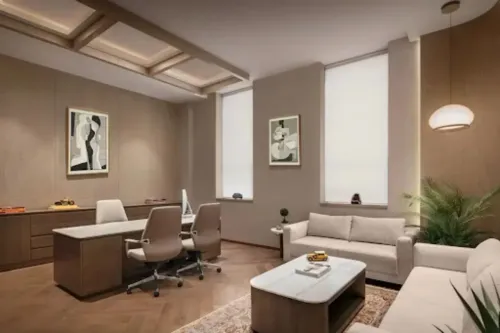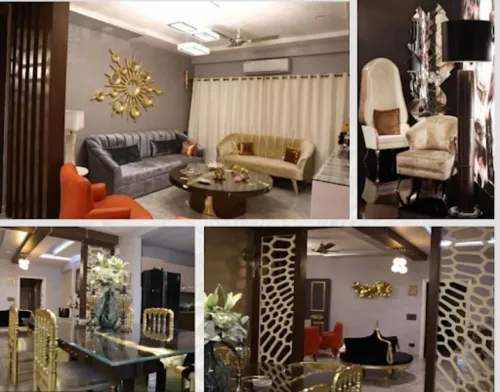
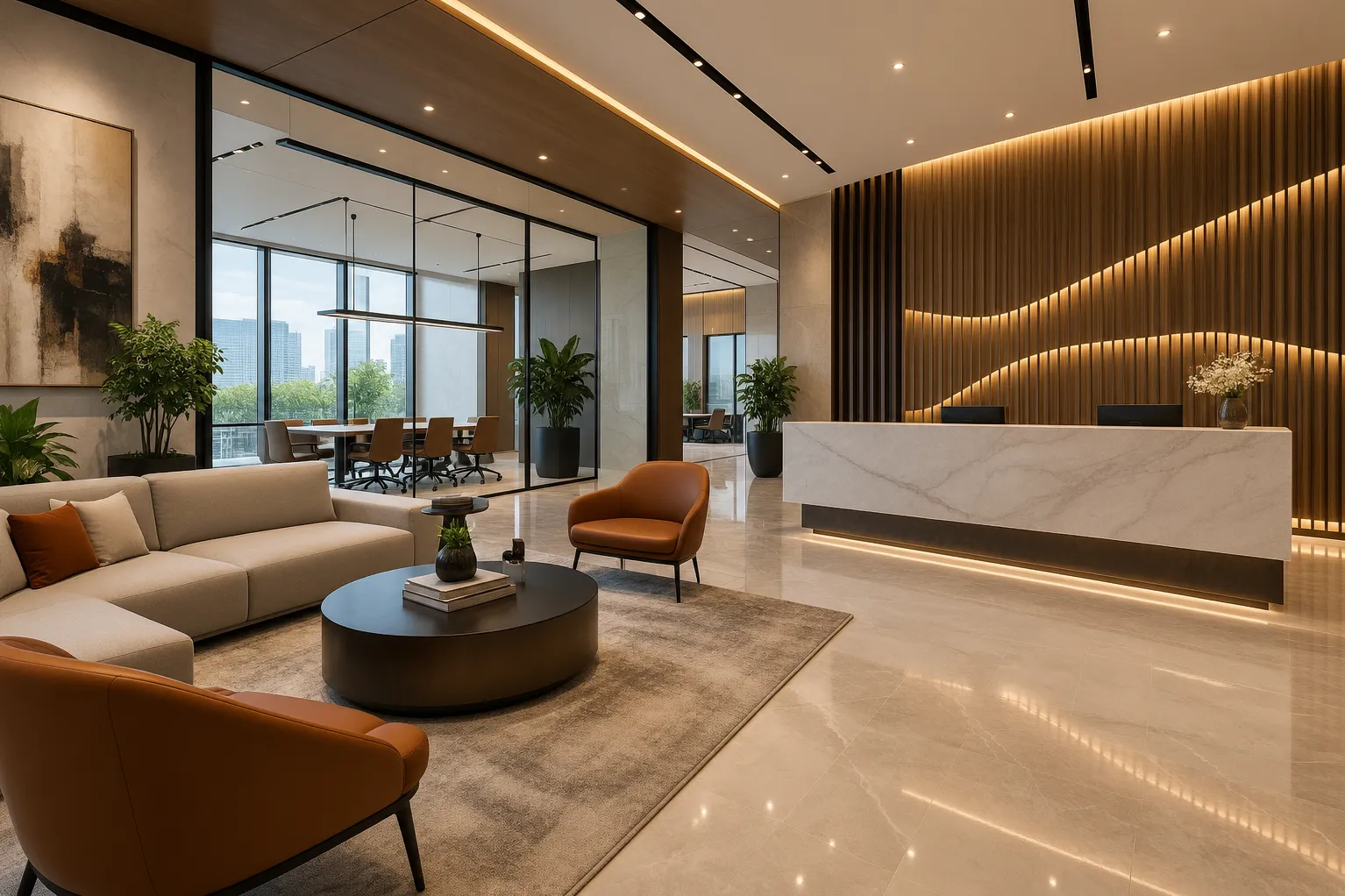
Premium commercial interiors need to achieve several objectives simultaneously. They should communicate brand identity, provide a positive customer experience, support staff operations, and withstand regular commercial use.
Choosing a luxury commercial interior designing company therefore requires more than comparing attractive portfolio photographs. Business owners should examine how the design team approaches functionality, brand interpretation, material performance, execution, and long-term usability.
Begin with Business Requirements
Commercial interiors should be developed around the way a business operates.
A restaurant requires efficient movement between dining and service zones. An office needs productive workspaces and appropriate meeting areas. A premium retail environment needs customer circulation and effective product presentation.
Hospitality properties must balance visual character with durability and guest comfort.
Before evaluating design concepts, clearly define:
- Business type
- Target customer
- Staff requirements
- Daily footfall
- Storage needs
- Brand positioning
- Operational priorities
- Expected maintenance level
These requirements give the project a practical foundation.
Look Beyond Decorative Design
Luxury commercial design should not be reduced to expensive surfaces and dramatic lighting.
A sophisticated business environment emerges when space planning, furniture, lighting, materials, branding, and operational requirements work together.
Ask prospective designers to explain why particular design decisions are appropriate for the business.
The explanation can reveal whether the concept is genuinely customised or primarily decorative.
Examine Material Suitability
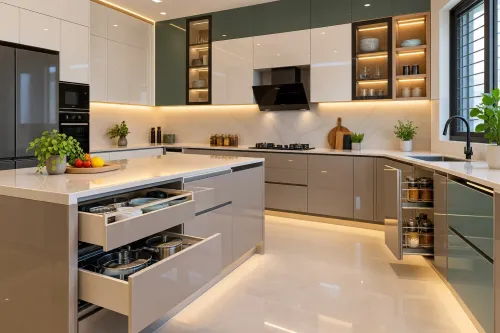
Commercial materials usually experience more intensive use than residential finishes.
Flooring, furniture, countertops, wall surfaces, upholstery, and hardware should therefore be evaluated for durability and maintenance.
A capable luxury commercial interior designing company should consider the lifecycle of materials rather than focusing exclusively on their appearance at handover.
Premium design should continue to look appropriate after regular use.
Evaluate Furniture Planning
Furniture influences both visual identity and commercial performance.
In restaurants, seating dimensions affect customer comfort and capacity. In offices, workstations influence productivity and circulation. In hospitality settings, furniture contributes strongly to the guest experience.
Custom furniture can help businesses use available space efficiently while maintaining a distinctive visual identity.
Ask About Execution Coordination
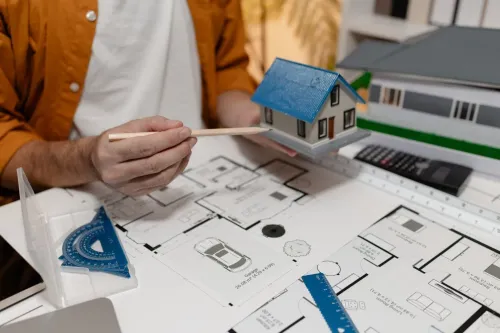
Commercial interior projects may involve civil modifications, electrical systems, lighting, HVAC coordination, flooring, ceilings, furniture, signage, and decorative finishes.
Without organised coordination, delays and on-site conflicts can occur.
Business owners should understand who supervises execution, how drawings are communicated, how material approvals are managed, and how changes are documented.
Consider the Local Project Environment
Commercial properties across Noida and Delhi NCR vary significantly in size, building regulations, access conditions, operational restrictions, and fit-out requirements.
A designer working in this regional environment should account for site-specific constraints during planning rather than discovering them after execution begins.
Design Doves works across interior design, turnkey solutions, and custom furniture, allowing different aspects of a commercial project to be considered within a connected design approach.
When choosing a luxury commercial interior designing company, businesses should evaluate strategic thinking as carefully as visual creativity. The strongest commercial interior is one that creates a premium impression while making the property easier for customers, employees, and operators to use every day.
Keywords